The History of 11 Ridout
It doesn’t look like much now, but this building at 11 Ridout Street was the home to a prominent doctor, a hospital, and the site of one of the most important events in Lindsay’s history.
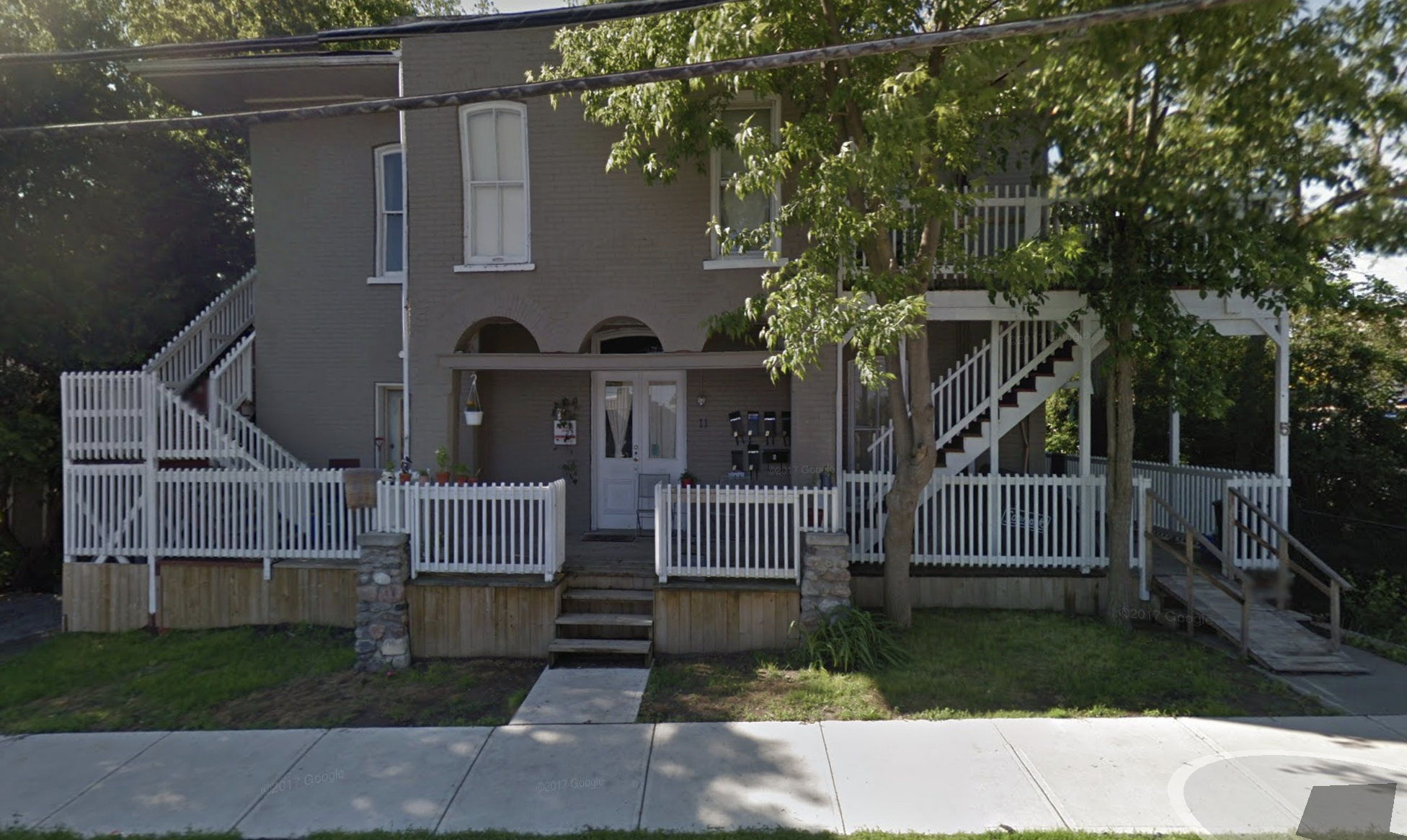
Google Image capture 2018.
Originally, this site “was the bed of a small creek which flowed into the Scugog River.” (Post 31 March 1936) Before the area was colonized, Lindsay was mostly cedar trees and small streams. The area was surveyed in the 1830s and slowly people started to settle, construct log cabins and wooden frame houses.
Jewett’s Hotel
When the Jewett family arrived in Lindsay in the 1850s, Benjamin Franklin Jewett (1834-1918) set up as a shoemaker on Ridout Street. By 1861, he had turned over the building to his father, Charles Stewart Jewett (c.1810-?), who ran a hotel out of the place, while Benjamin had begun constructing new premises. All was well for the Jewett family until 5 July 1861.
Most of what we know about the fire comes from an article specially written for the Post by E. C. Guillet. The writer sourced his information from a letter written on the day of the fire by C.B. Robinson of Lindsay to the Toronto “Globe” that was reprinted in the Cobourg “Sentinel” on 13 July 1861, and an account of the fire in the Cobourg “Sentinel” on the same date as quoted from the Victoria “Herald.”
In Guillet’s article, he writes the fire started in an unfinished building on Ridout Street. “A few minutes later it spread to the three-storey frame hotel, owned and occupied by C.S. Jewett.” The article details the fire’s spread and lists the businesses lost that day. Biographies of those who survived the fire were detailed in Lois B. Magahay’s book, Assets in Ashes. (Guillet’s article can be found in the Beall scrapbook, now part of the KLMA collection. No date is given with the clipping, but around 1930, Guillet published several articles about the area’s history.)
It was an event that forever changed Lindsay’s physical landscape. Out of this disaster, the Town instilled a by-law that required buildings to be made of brick. Up until the fire, the citizens relied on bucket brigades, and after the castrophe, the Town acquired a fire truck and fire fighters.
While many of the razed businesses rebuilt within the year, the Jewetts did not. Instead, Benjamin Jewett went on to run a hotel with his brother, Charles Jr., on Kent Street West in the new Keenan block. It was also called the Central Hotel and became known as the Simpson Hotel after the Simpson family purchased the hotel. (The Simpson Hotel was located at corner of Kent and York Streets, and evolved into Cluxton’s store and is now gone, replaced with a new build.)
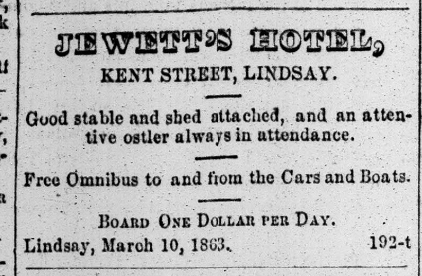
Canadian Post.
In place of the hotel, a house was built at 11 Ridout, and many of the recollections from the 60th anniversary of the fire described the location as being the more current Dr. Blanchard’s house. But before Blanchard acquired the property, another doctor lived and worked there.
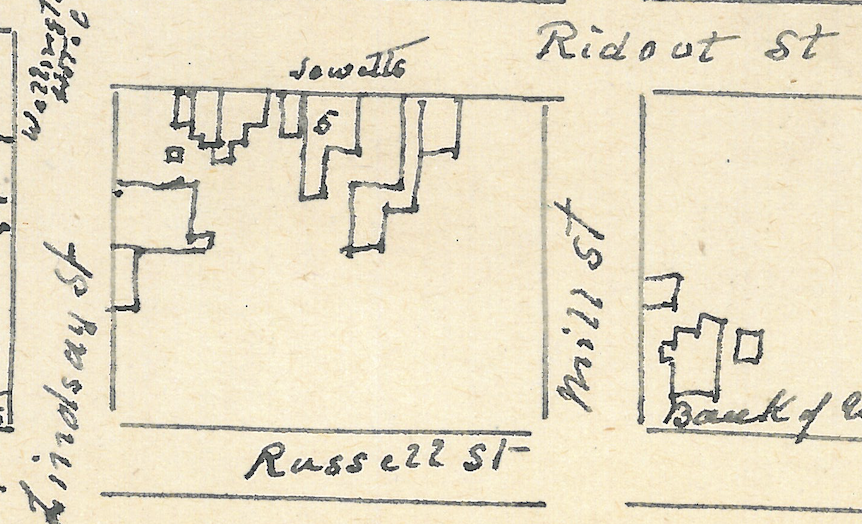
detail of hand-drawn map from the Beall scrapbook showing location of Jewitt’s hotel.
Dr. William Kempt
The Kempt name was well known in Lindsay, for George Kempt (1821-1885) operated a large lumber mill and grain business. In 1852, he brought in a a contingent of French Canadian lumbermen to McLaren’s Creek to clear out the stream and its banks. He lost everything in the 1861 fire. George served on Town Council and was a representative for the United Counties of Victoria and Peterborough. In 1867, he was elected Member of Parliament in the first election following Confederation. In 1872, George was appointed Sheriff for Kawartha Lakes (then Victoria County) folliwing the death of Sheriff McDougall.
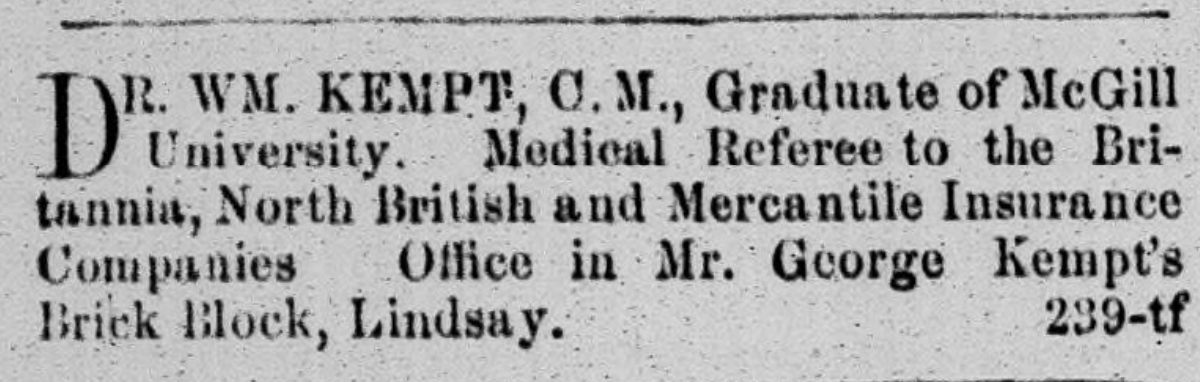
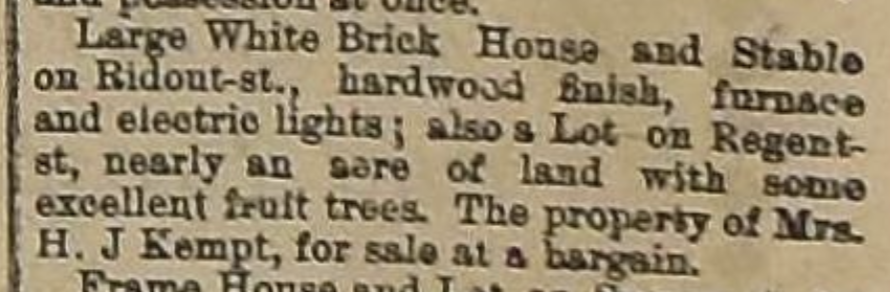
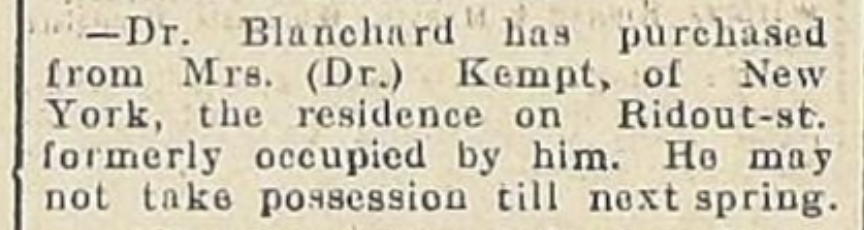
Dr. William Kempt graduated from McGill University’s medical school and came to Lindsay to set up practise. Dr. Kempt lived and worked in Lindsay, raising his family, until he removed to Peterborough. He retained ownership of the house and property while living in Peterborough. He passed away in 1897, but his widow didn’t sell the house and property until 1902. It sat on the market until it was acquired by Blanchard.
Dr. Fabian Blanchard
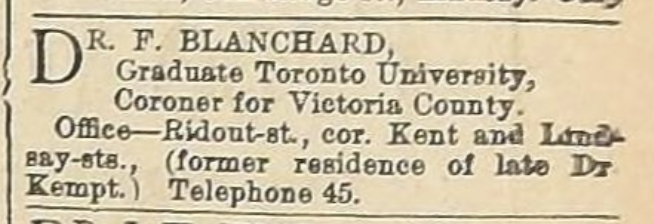
Dr. Fabian Blanchard was born in Sutton, ON to parents Alexander Blanchard and Josette Matte. After he graduated from medicine at the University of Toronto, he had a practise in Victoria Road for two years. He moved to Lindsay where he practiced medicine for over forty years. He married Marion Benson and lived at 11 Rideout Street. They had 7 children. He died at home May 9, 1935.
One of the Blanchards’ daughters, Alexandrine, married Allan T. Lacey, an early founder of KLMA. Their son, Edward Lacey, published the first book of gay poetry in Canada. His life and work are currently on exhibit.
Interestingly, Dr. Blanchard didn’t actually own the house himself. It was the property of Michael E. Tangney, (founder of Tangney’s Furniture in 1890), who purchased the house and property in 1904. Another of the Blanchards’ daughters, Alice, married Joseph Tangey, eldest son of Michael E. Tangney.
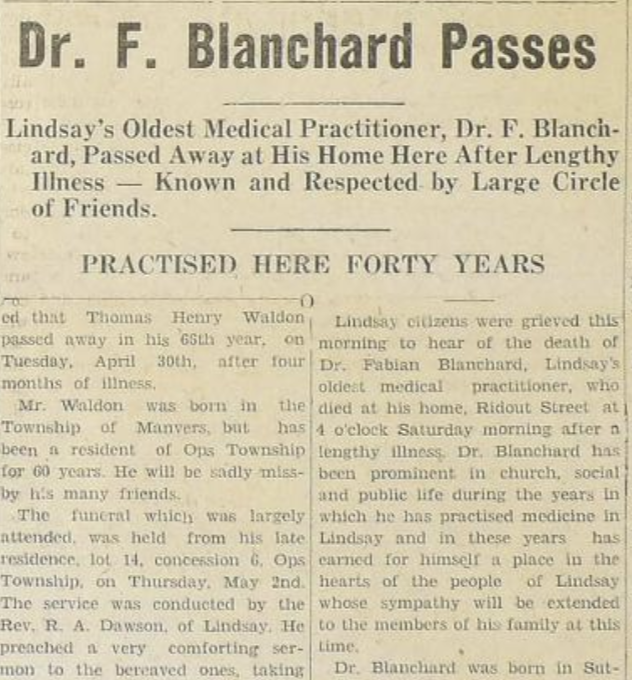
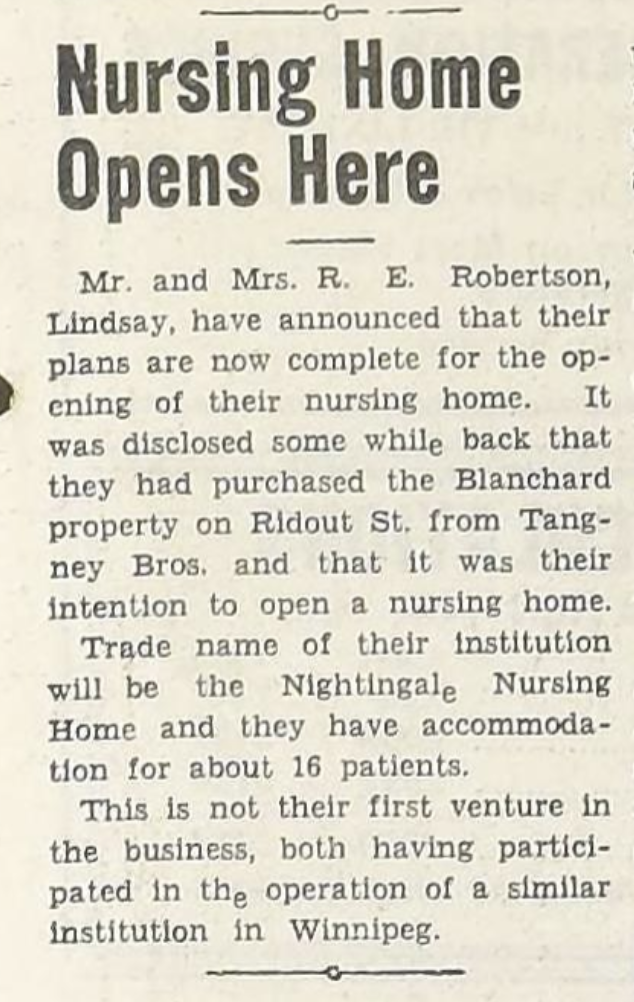
Michael E. Tangney sold the property in 1948 to the Robertsons, who converted the single family dwelling into the Nightingale Nursing Home.
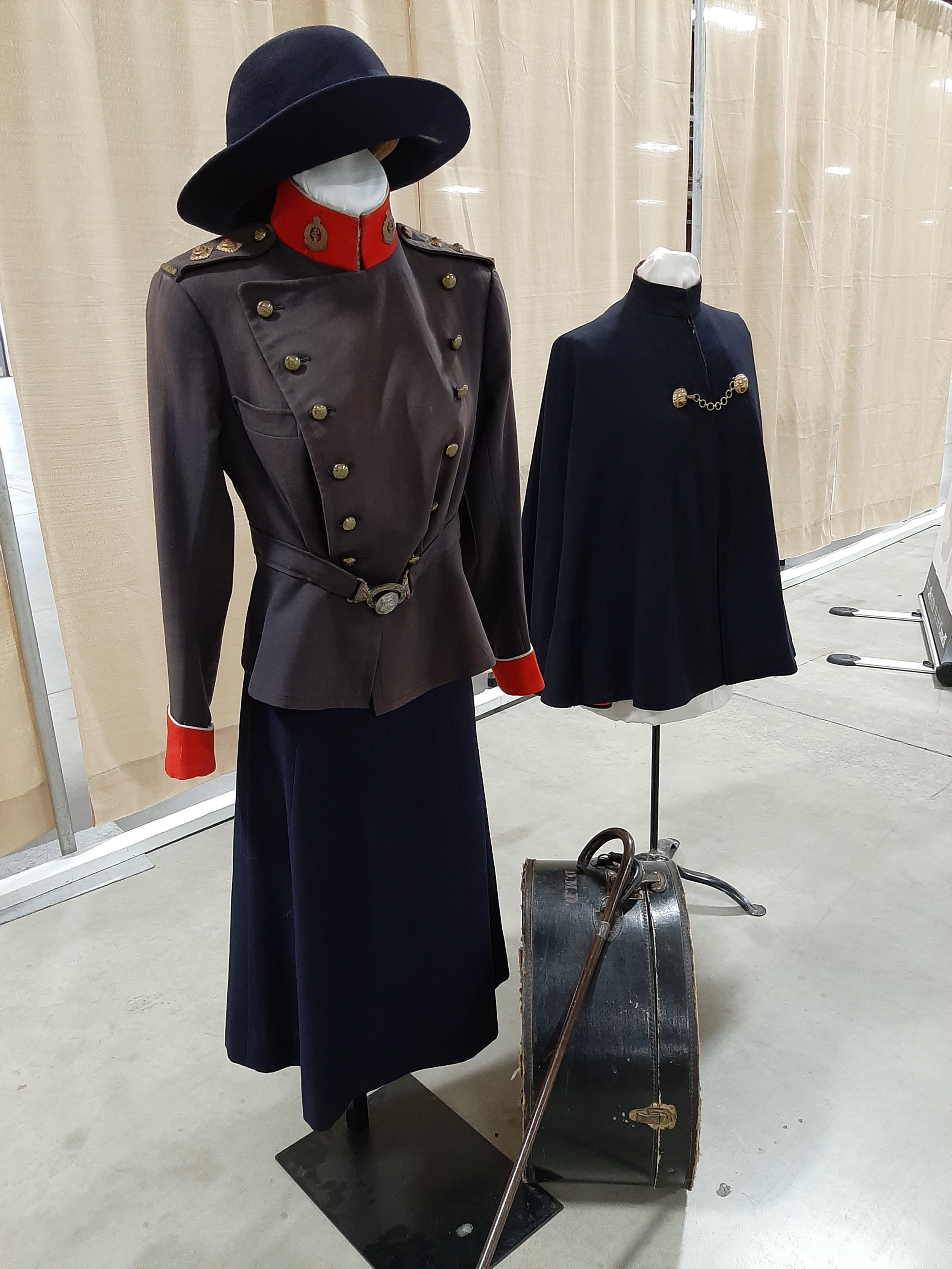
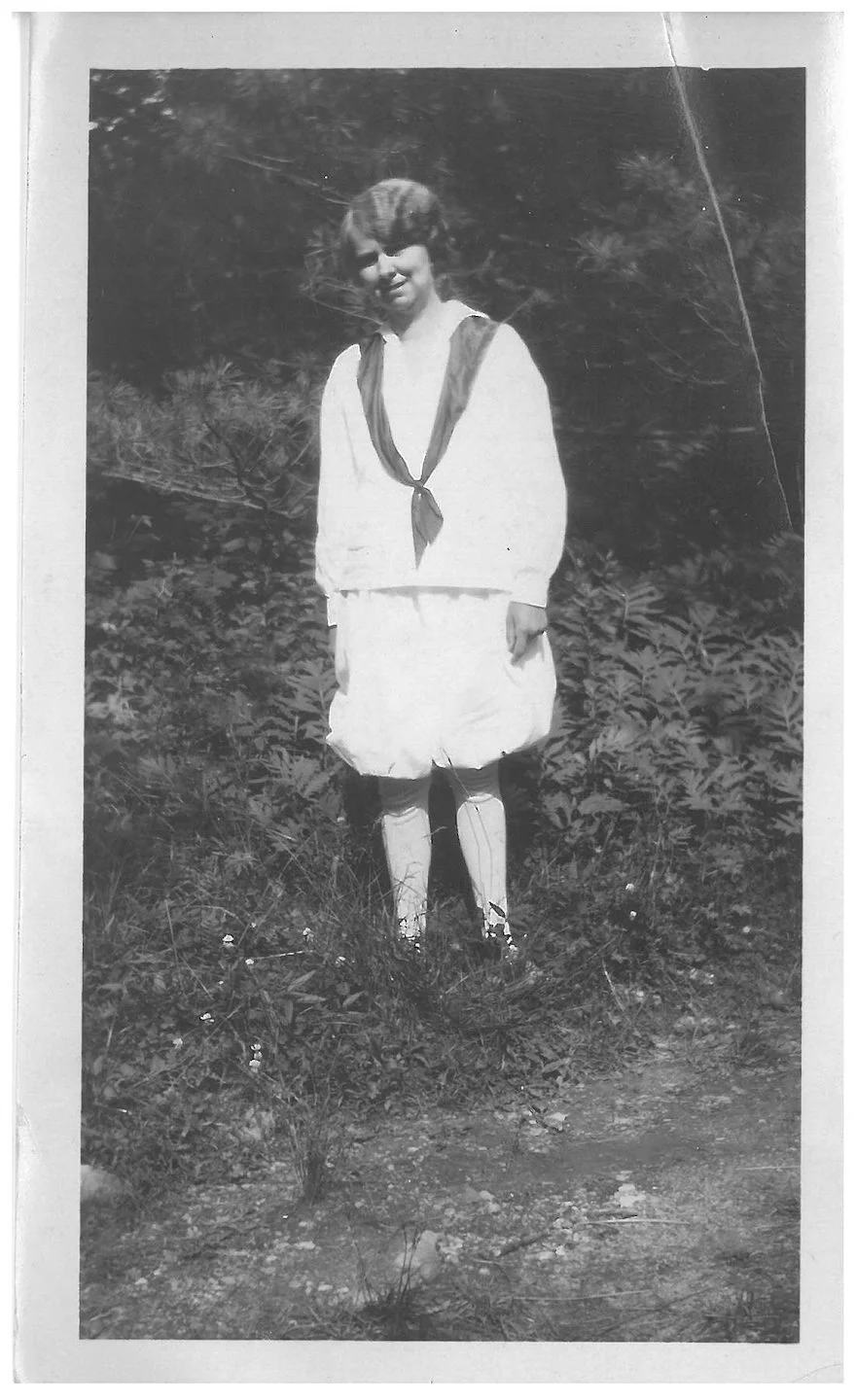
One of the “nightingales” employed at the new nursing home was Maude Dayton. Delia Maude Dayton (1887-1970) was a Nursing Sister who served in the First World War. The KLMA has Maude’s nursing uniforms and has featured her in past exhibitions.
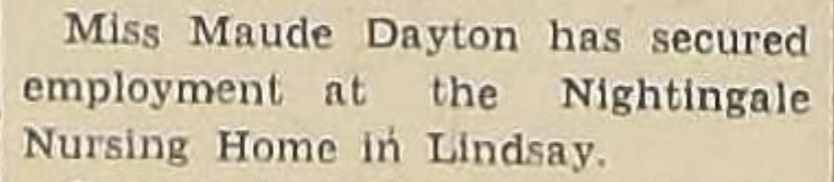
Post 6 October 1948.
Lindsay Private Hospital
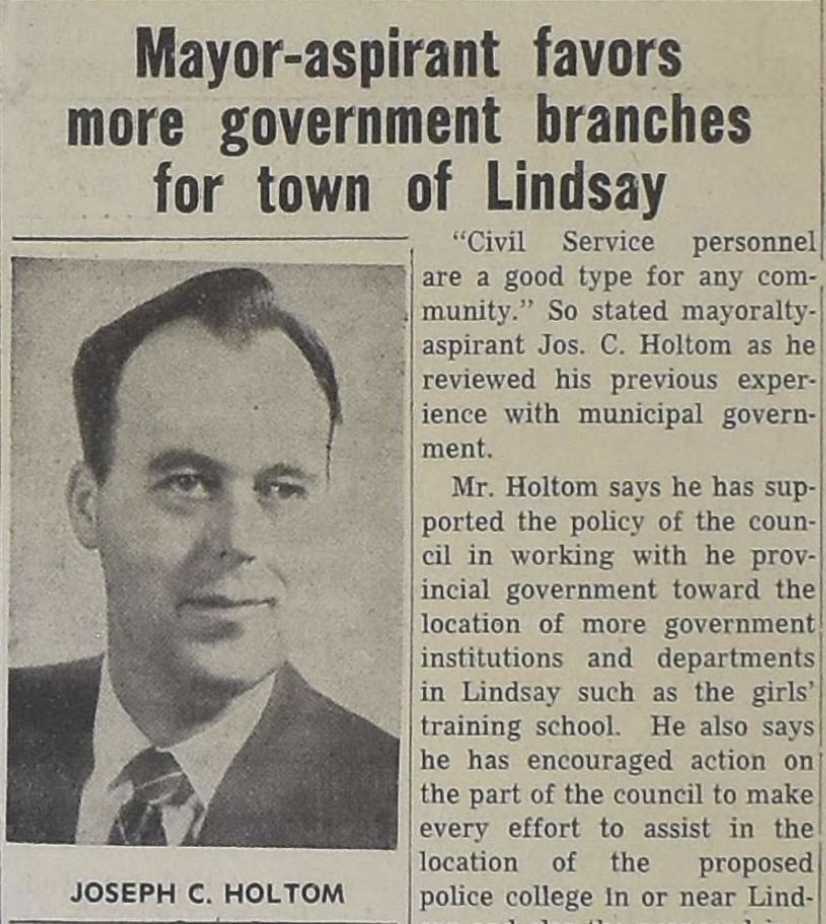
Within a year, the Robertsons sold the business to none other than Joseph and Ruth Holtom. Ruth Holtom was an experienced graduate nurse, while Joe Holtom was retiring from his work with the Ontario Department of Travel and Publicity. He went on to become Mayor of the town of Lindsay, serving that position from 1961 to 1965 while also living and working at the nursing home.
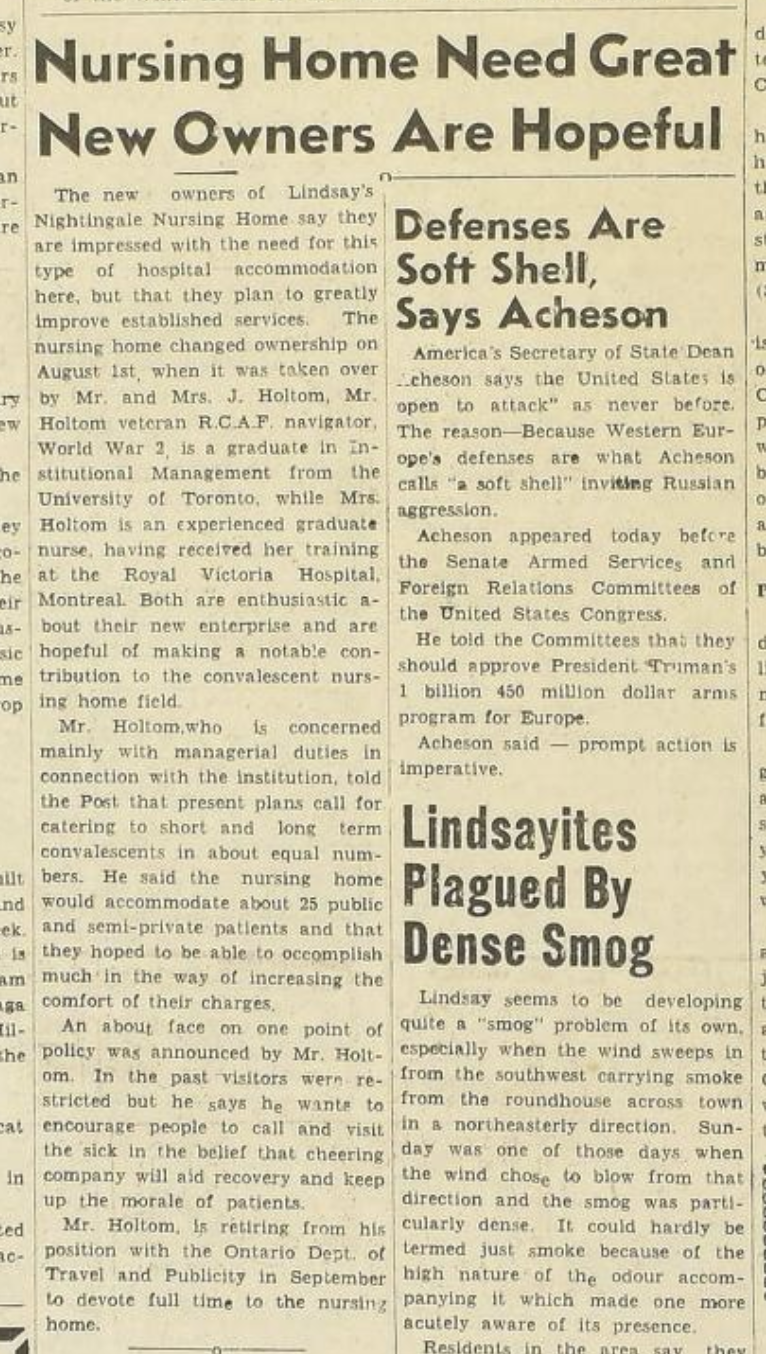
Post 10 August 1949.
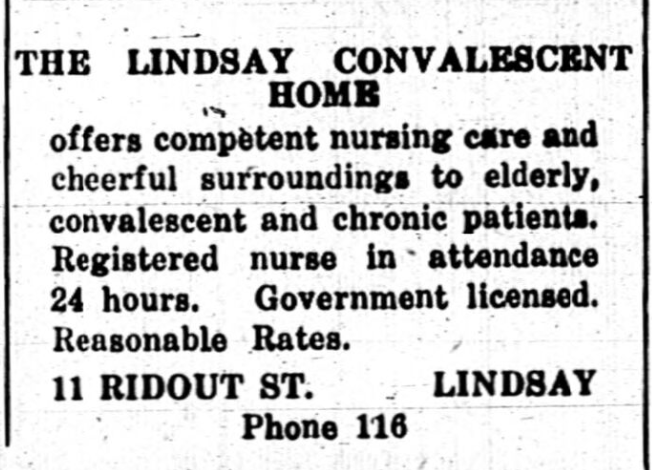
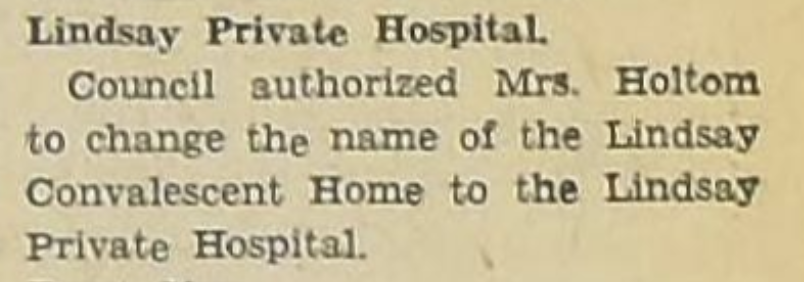
When the Holtoms took over, the name was changed to the Lindsay Convalescent Home. Then in March 1951, Ruth Holtom appealed to town council to change the name to the Lindsay Private Hospital.
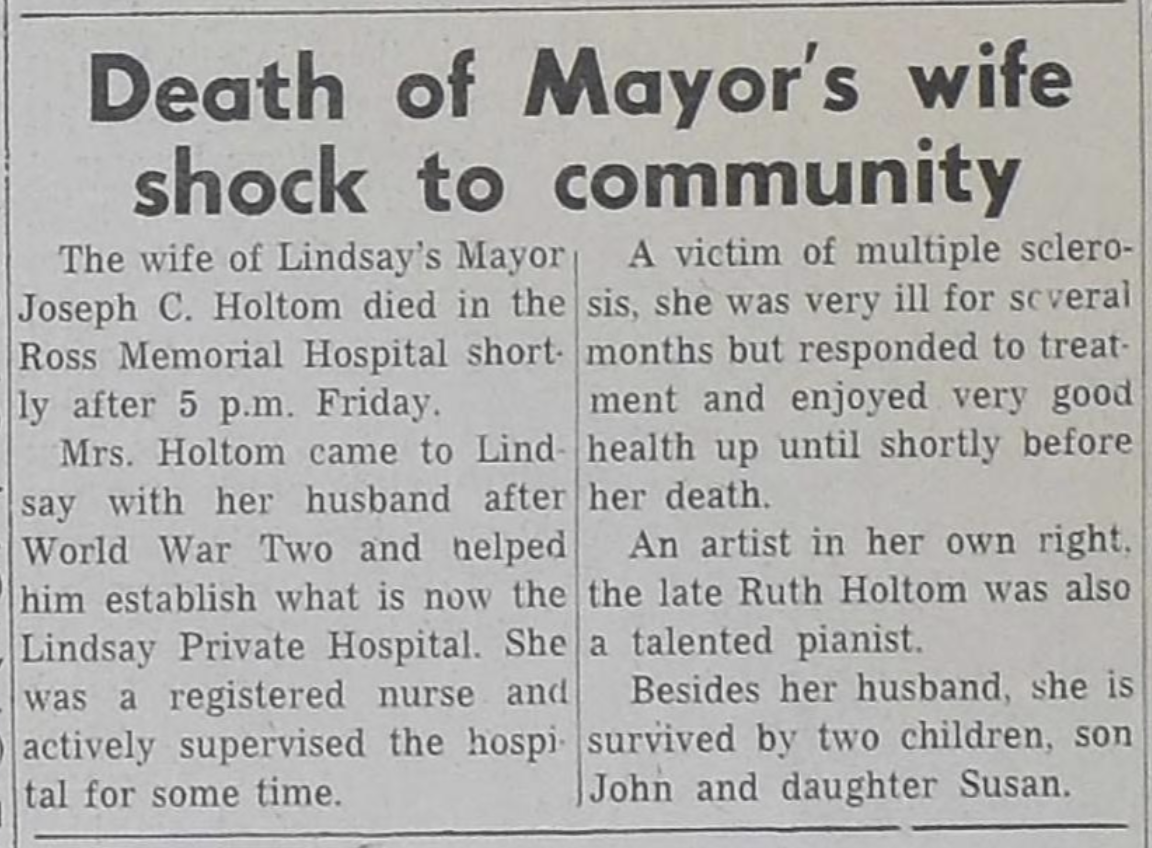
Sadly, Ruth Holtom passed away in 1961. Joseph remarried in 1963 to Nell MacDonnell. Joseph Charles Holtom passed away in 1996.
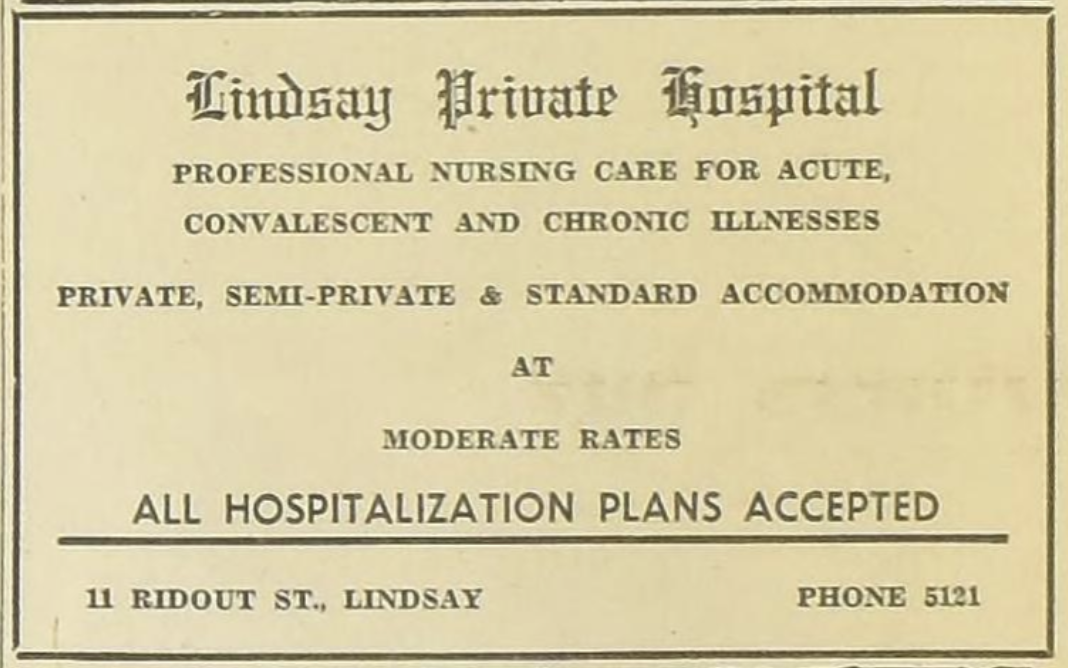
Eventually, the Holtoms sold the Lindsay Private Hospital.
The building is now used as an apartment building.
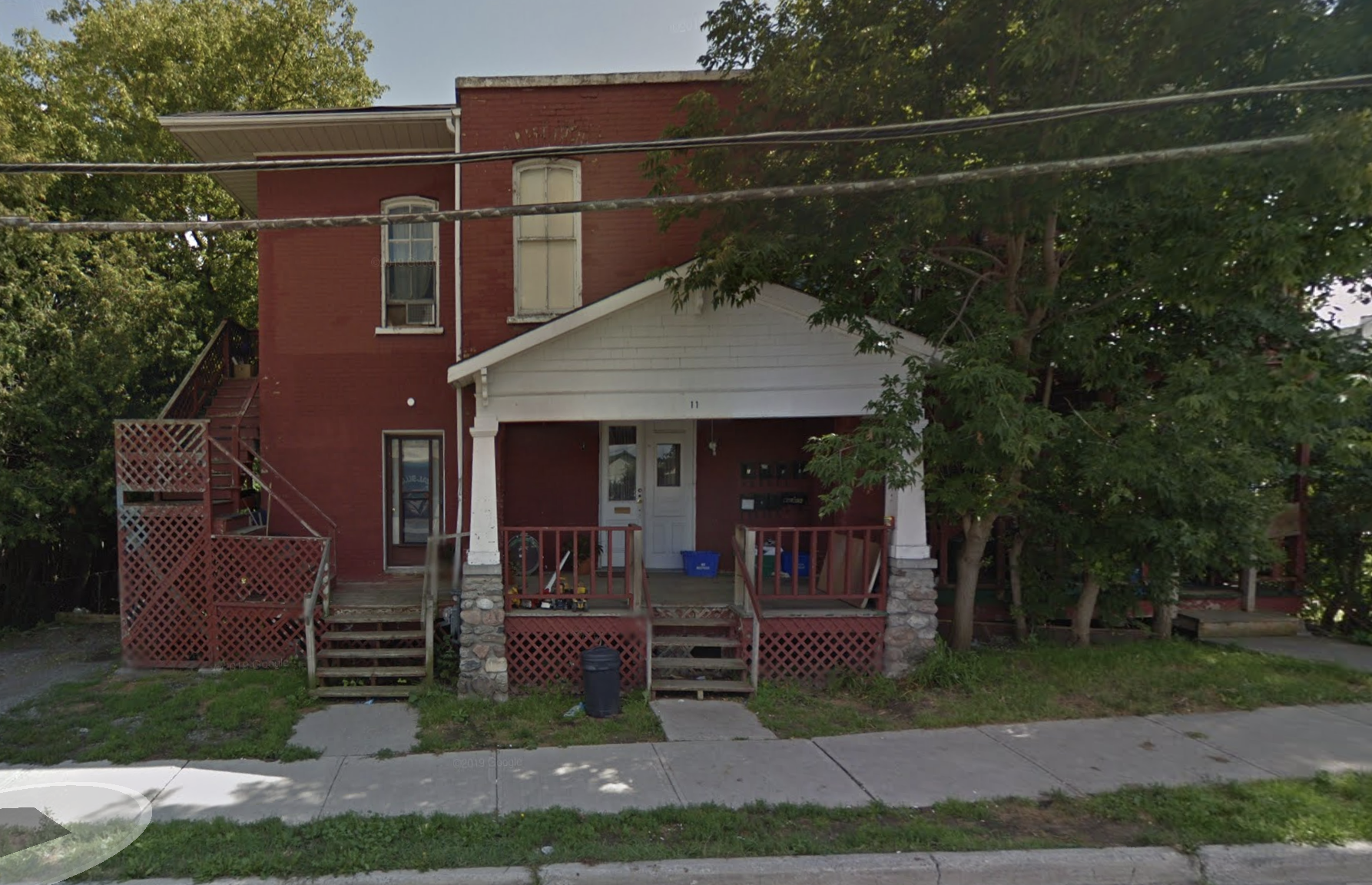
Google Image capture 2011.